
Showing 0 products
Frequently Asked Questions
What divides the group?
Whether the water will be drunk.
A potable tank is an approved product.
Made from certified materials.
With sealing, screening and a regime.
A non-potable one has none of that.
Can I use a cheaper tank for drinking water?
No - it is a different product.
Not a cheaper version of the same one.
Materials leach, and openings admit.
And the water looks identical throughout.
The failure is entirely invisible.
What else has to be decided?
Volume, shape and access.
Volume decides the weight when full.
Shape decides whether it fits the space.
And access decides whether it arrives.
Through every doorway on the way.
What if it cannot get through the door?
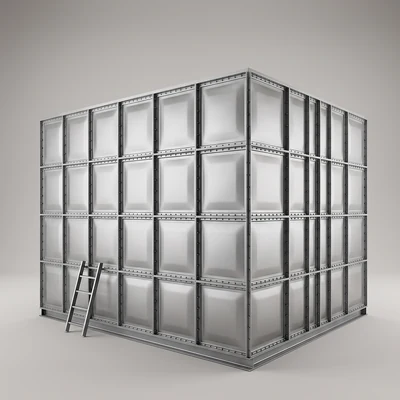
That is what sectional tanks are for.
Built in place from flat panels.
Each of which fits through.
A one-piece tank has no such option.
Measure the route, not just the room.
How should a tank be supported?
Continuously, across its whole base.
A platform rather than bearers.
Water finds any unsupported area.
And deforms a plastic base into it.
Joists alone are not enough.
Why does the overflow have to be oversized?
Because of what it guards against.
An inlet valve stuck fully open.
The overflow must pass more than the inlet.
Or the tank fills faster than it drains.
And the surplus finds the ceiling.
Should the overflow discharge visibly?
Yes, somewhere it will be noticed.
A warning pipe is a warning.
Discharging into a drain hides the fault.
Which then runs for months.
Site it where somebody will see it.