PVC vs. XLPE: Comparison of Two Most Popular Cable Insulations
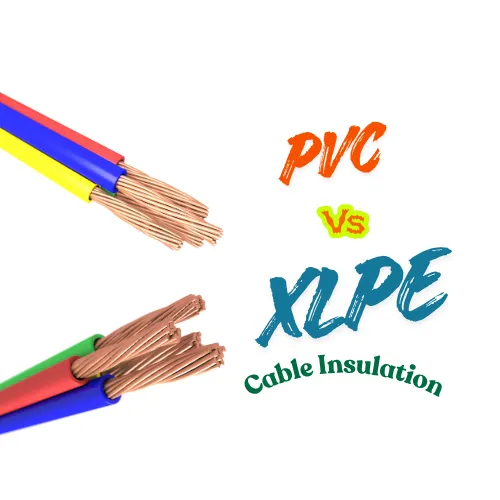
In the electrical industry, cable insulation plays a vital role in ensuring safety, performance, and durability. Among the most common insulation materials used today are PVC (Polyvinyl Chloride) and XLPE (Cross-Linked Polyethylene).
While both serve the same basic purpose — protecting conductors and preventing electrical leakage — they differ significantly in thermal performance, chemical resistance, flexibility, and long-term reliability.
This guide breaks down the differences between PVC and XLPE, their advantages, applications, and performance, to help you make an informed choice for your next electrical project.
What Is Cable Insulation?
Cable insulation is the non-conductive material that surrounds the conductor in a cable, preventing electrical contact between conductors and other objects.
Good insulation ensures:
-
Electrical safety
-
Heat resistance
-
Moisture and chemical protection
-
Mechanical strength
Different applications require different insulation materials, depending on factors like operating voltage, temperature, and environmental exposure.
Understanding PVC and XLPE
1. PVC (Polyvinyl Chloride)
PVC is one of the most widely used insulation materials in low- and medium-voltage cables. It is a thermoplastic polymer, meaning it softens when heated and hardens when cooled.
Key Characteristics of PVC:
-
Temperature Rating: Up to 70°C (standard), 90°C (heat-resistant grades)
-
Flame Retardant: Naturally self-extinguishing
-
Chemical Resistance: Good resistance to oils, acids, and alkalis
-
Flexibility: Highly flexible and easy to install
-
Cost: Relatively low, making it suitable for general wiring and building installations
Common Applications:
-
Domestic and commercial wiring
-
Control cables and lighting systems
-
Industrial power distribution
-
Temporary wiring installations
2. XLPE (Cross-Linked Polyethylene)
XLPE, or Cross-Linked Polyethylene, is a thermosetting polymer — once cross-linked, it cannot be melted or reshaped. The cross-linking process enhances its thermal, electrical, and mechanical properties, making it suitable for higher voltage and temperature applications.
Key Characteristics of XLPE:
-
Temperature Rating: Up to 90°C continuous operation, 250°C short-circuit
-
Thermal Stability: Excellent resistance to heat deformation
-
Dielectric Strength: Superior electrical insulation performance
-
Moisture Resistance: Excellent water and chemical resistance
-
Durability: High mechanical strength and long service life
Common Applications:
-
Medium and high-voltage power cables
-
Underground and submarine cables
-
Industrial motors and transformers
-
Renewable energy systems (solar, wind, etc.)
PVC vs. XLPE: Key Differences
| Property | PVC Insulation | XLPE Insulation |
|---|---|---|
| Type | Thermoplastic | Thermoset |
| Max Operating Temperature | 70°C (standard) | 90°C continuous, 250°C short-circuit |
| Thermal Aging Resistance | Moderate | Excellent |
| Chemical Resistance | Good | Excellent |
| Flexibility | More flexible | Slightly rigid |
| Water Resistance | Fair | Excellent |
| Flame Retardancy | Self-extinguishing | Requires additives |
| Dielectric Strength | Moderate | High |
| Cost | Lower | Higher |
| Typical Use | Domestic wiring, control panels | Industrial, high-voltage, outdoor installations |
Performance Under Extreme Conditions
Temperature:
PVC insulation softens under high temperatures and becomes brittle in extreme cold. In contrast, XLPE withstands higher operating temperatures without deforming, making it ideal for high-load or high-ambient environments.
Electrical Performance:
XLPE offers better dielectric strength, meaning it can handle higher voltages safely. It also maintains insulation resistance better over time, reducing leakage and power loss.
Chemical and Environmental Resistance:
While PVC performs well in indoor settings, XLPE provides superior protection against moisture, chemicals, and UV radiation — ideal for underground or outdoor installations.
Advantages of PVC Cables
✅ Affordable and readily available
✅ Easy to handle and install
✅ Self-extinguishing and flame-retardant
✅ Good for low and medium voltage circuits
✅ Suitable for flexible or portable wiring
Advantages of XLPE Cables
✅ Higher current-carrying capacity
✅ Better heat, moisture, and chemical resistance
✅ Longer service life
✅ Reduced dielectric losses
✅ Ideal for harsh or outdoor environments
Cost Comparison
PVC cables are less expensive due to lower material and manufacturing costs. However, XLPE cables, though more costly upfront, offer a longer lifespan and reduced maintenance costs, especially in demanding applications.
In industrial settings where efficiency and durability matter, XLPE often delivers better value over time.
Which One Should You Choose?
The right insulation depends on your application:
-
Choose PVC for residential wiring, indoor panels, and light-duty circuits where flexibility and affordability are key.
-
Choose XLPE for industrial power systems, underground installations, or high-temperature environments where long-term reliability and performance are critical.
Example:
A 4mm² PVC-insulated copper cable may suffice for household lighting, but a similar XLPE-insulated cable would be preferred for an industrial motor supply line exposed to heat and moisture.
Environmental and Safety Considerations
PVC, while cost-effective, releases toxic gases (like HCl) when burned. XLPE, on the other hand, is halogen-free and produces less smoke, making it safer in confined or public spaces.
For environmentally conscious projects, XLPE cables with low-smoke, zero-halogen (LSZH) jackets are becoming increasingly popular.
Conclusion
Both PVC and XLPE cables have unique advantages — the choice largely depends on the voltage level, installation environment, and budget.
-
Use PVC for cost-effective, flexible, low-voltage installations.
-
Use XLPE for high-performance, heat-resistant, and outdoor applications.
At Eyby Marketplace, we offer a wide selection of PVC and XLPE insulated cables from trusted global brands — available in various sizes, voltages, and sheath types to meet your project needs.
Whether you’re wiring a building or powering industrial systems, Eyby makes it easy to source, compare, and buy quality electrical cables all in one place.
Frequently Asked Questions (FAQs)
1. Is XLPE better than PVC?
Yes, XLPE provides better heat resistance, higher current capacity, and longer lifespan, making it ideal for industrial or outdoor applications.
2. Can PVC cables be used outdoors?
PVC cables can be used outdoors if properly shielded, but they degrade faster under UV and heat compared to XLPE.
3. What voltage levels are suitable for XLPE cables?
XLPE is suitable for low, medium, and high-voltage applications, including 11kV, 33kV, and beyond.
4. Are XLPE cables fire-resistant?
XLPE itself isn’t fire-retardant but can be combined with LSZH compounds to improve fire safety.
5. Which is more flexible, PVC or XLPE?
PVC is more flexible, making it easier to install in tight bends or conduits.
Disclaimer
The information provided in this article is for general educational and informational purposes only. While every effort has been made to ensure accuracy, Eyby Marketplace does not assume responsibility for any errors, omissions, or outcomes resulting from the use of this content. Always consult a qualified electrical engineer or cable manufacturer to verify specifications and ensure compliance with local electrical standards and regulations before installation.
Related Posts
Sandblasting Sand: Why the Cheapest Abrasive Costs You the Most
Types of Pliers: Jaw Shapes, Grip and What Each Pair Is For