IPE vs. IPN for Multi-Story Frames: Why Parallel Flanges Win in 2026
📌 Quick Summary:
- Core Recommendation: IPE beams are the industry standard for 2026 multi-story construction due to their parallel flanges, which simplify high-load connections.
- Structural Edge: IPE beams offer a superior strength-to-weight ratio and higher moment of inertia compared to IPN, reducing total building deadweight.
- Fabrication Logic: Parallel flanges (IPE) eliminate the need for tapered washers, significantly reducing welding and bolting labor costs.
- Standard Compliance: Modern projects must adhere to EN 10365 (dimensions) and EN 10025 (material grades like S355JR).
🏛️ The Structural Shift: IPE as the Modern Standard
In modern multi-story architecture, the demand for open floor plans and reduced foundation loads has made the IPE (European I-Beam) the dominant choice over the traditional IPN (European Standard Beam).
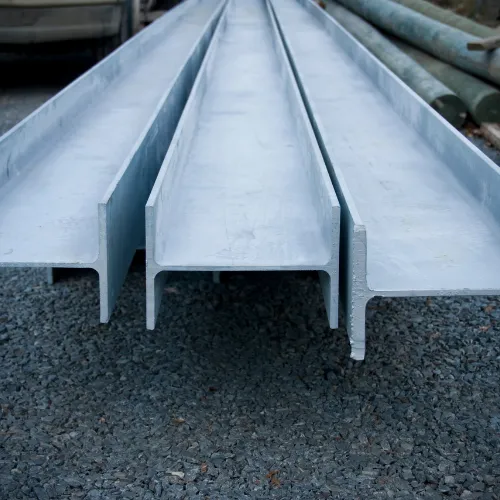
While both are "I-profiles," their geometric differences create a massive impact on building performance. IPE beams feature parallel flanges with uniform thickness, whereas IPN beams feature tapered flanges that are thicker near the web.
Here's a visual comparison of IPE and IPN profiles:
🏗️ 3 Reasons IPE Dominates Multi-Story Construction
1. Superior Strength-to-Weight Optimization
Multi-story frames require materials that can support high bending moments without adding unnecessary mass.
- The IPE Advantage: By distributing material more efficiently in the flanges, IPE profiles achieve a higher moment of inertia relative to their weight. This allows for longer spans between columns.
- Deflection Control: In 2026 high-rise standards, limiting "sway" and deflection is critical. IPE’s wider flanges provide better lateral stability compared to the narrow, tapered profile of the IPN.
2. High-Efficiency Fabrication and Joining
In the "Time-is-Money" landscape of modern construction, the ease of assembly is a primary cost driver.
- Bolting Efficiency: Connecting secondary beams to columns is significantly faster with IPE. Because the flanges are parallel, bolts sit flush against the surface.
- The IPN Conflict: IPN beams require tapered washers (beveled washers) to compensate for the 14% slope of the flange. This adds "part count" to the project and increases the risk of installation error.
- Welding Precision: For 2026 EN 1090-2 certified welding, parallel surfaces ensure more consistent heat distribution and easier joint preparation.
3. Vertical Integration with MEP Systems
Modern buildings must house complex Electrical and HVAC systems.
- Clash Management: The consistent dimensions of IPE beams make them easier to model in BIM (Building Information Modeling) software.
- Utility Routing: Parallel flanges provide a predictable "pocket" for running conduit and ductwork, whereas the variable thickness of IPN flanges can complicate bracket mounting.
⚖️ Technical Comparison: IPE vs. IPN
|
Metric |
IPE (Parallel Flange) |
IPN (Tapered Flange) |
|
Flange Shape |
Parallel (Uniform thickness) |
Tapered (Sloped interior) |
|
Bending Resistance |
High (Optimized for span) |
Moderate (Better for concentrated loads) |
|
Connection Ease |
Excellent (Standard bolting) |
Challenging (Requires beveled washers) |
|
2026 Trend |
Growing (Primary structural) |
Declining (Specialized machinery) |
📏 Standards and Grades for 2026
To ensure safety in multi-story environments, EYBY Marketplace verifies all beams against current European Norms:
- Dimensions: Verified under EN 10365.
- Tolerances: IPE follows EN 10034; IPN follows EN 10024.
- Material Grade: We recommend S355JR for multi-story frames to maximize yield strength and minimize material volume.
🛒 Why Source via EYBY Marketplace?
EYBY Marketplace is the bridge between structural design and high-quality procurement. We offer:
- Verified Mill Certificates: Every IPE beam comes with full traceability for 2026 compliance.
- Bundle Discounts: Order your Fasteners (Grade 10.9) and Welding consumables alongside your beams for a unified logistics experience.
- Expert Support: Our team can help you transition your legacy IPN designs into modern, high-efficiency IPE specifications.
❓ Frequently Asked Questions (FAQ)
Can I swap IPN for IPE in an existing design?
Technically yes, but it requires a structural review. Because IPE is lighter but often wider, your connection points and "clash detection" in the MEP system may need adjustment.
Why does IPN still exist?
IPN beams are still valuable for specific heavy-duty machinery frames and historical renovations where "directional strength" is more important than overall weight optimization.
What is the most common IPE size for multi-story floors?
IPE 200 through IPE 400 are common for secondary floor beams, while larger sizes like IPE 600 are used for primary girders.
Related Posts
Sandblasting Sand: Why the Cheapest Abrasive Costs You the Most

Types of Pliers: Jaw Shapes, Grip and What Each Pair Is For