
MCB vs. MCCB vs. RCBO: The Ultimate Guide to Electrical Circuit Protection
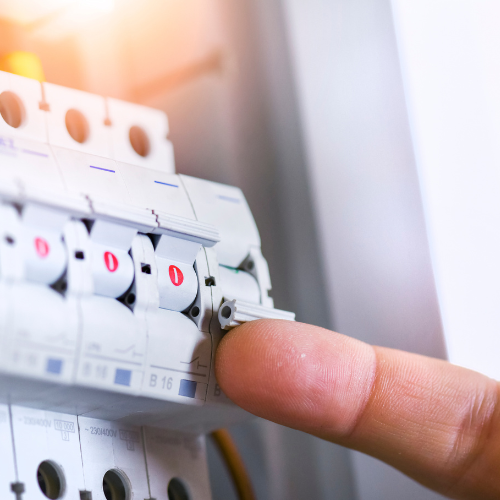
Electricity is the invisible force that powers our modern world, from the lights in our homes to the industrial machinery that builds our cities. But this power, when uncontrolled, is incredibly dangerous. In any electrical installation, safety is the number one priority. This safety is ensured by a family of unassuming devices hidden away in your distribution board or switchgear: circuit breakers.
However, navigating the world of circuit breakers can feel like deciphering an alphabet soup of acronyms: MCB, MCCB, RCBO. What do they mean? Aren't they all just "trip switches"? While they all provide electrical protection, their roles, capabilities, and applications are critically different. Using the wrong one isn't just a matter of code compliance; it's a serious safety risk.
This guide will demystify these essential components. We'll break down the MCB (Miniature Circuit Breaker), the MCCB (Molded Case Circuit Breaker), and the RCBO (Residual Current Breaker with Overcurrent). You'll learn exactly what each device does, how it works, and most importantly, how to distinguish them to ensure the right protection for the right job.
What is a Circuit Breaker? The Foundation of Electrical Protection
Before we dissect the MCB, MCCB, and RCBO, let's establish what a circuit breaker fundamentally is.
At its core, a circuit breaker is an automatic electrical switch designed to protect an electrical circuit from damage caused by excess current. It interrupts the flow of electricity to prevent a fault from overheating wires, causing fires, or destroying equipment.
This "excess current" (or overcurrent) primarily comes in two forms:
1. Overloads: This occurs when a circuit is asked to draw more current than it is rated for, over a sustained period. Think of plugging a high-power heater, a toaster, and a microwave into a single outlet strip. The wiring isn't designed for that total load, will begin to heat up, and could melt its insulation, leading to a fire.
2. Short Circuits: This is a much more dangerous and immediate fault. It happens when a live (phase) conductor makes direct contact with a neutral conductor or an earth conductor (e.g., due to damaged insulation or a faulty appliance). This creates a very low-resistance path, causing a massive, near-instantaneous surge of current—thousands of times the normal level—that can cause sparks, explosions, and fire.
All circuit breakers (including the MCB and MCCB) are designed to detect and protect against both of these overcurrent conditions. The RCBO does this, too, but adds a crucial third layer of protection.
Deep Dive: The MCB (Miniature Circuit Breaker)
The MCB, or Miniature Circuit Breaker, is the most common type of circuit breaker found in modern homes, apartments, and light commercial applications. It's the standard for protecting final circuits—the ones that directly power your lights, sockets, and fixed appliances.
What is an MCB?
An MCB (Miniature Circuit Breaker) is a modular, electromechanical device designed to provide automatic overcurrent protection.
· Key Characteristics:
o Function: Protects against overload and short circuit faults.
o Current Rating: Typically available in ratings from 2 Amps up to 125 Amps (A).
o Trip Settings: The trip characteristics are fixed and cannot be adjusted by the user.
o Breaking Capacity: Has a lower breaking capacity (measured in kilo-amperes, or kA), often 6kA or 10kA. This is the maximum fault current it can safely interrupt.
o Mounting: Designed to be easily snapped onto a standard DIN rail inside a consumer unit or distribution board.
How Does an MCB Work?
An MCB has two distinct mechanisms inside it to handle the two different types of overcurrent faults:
1. Thermal Trip (for Overloads): This protection comes from a bimetallic strip. When the circuit is overloaded (e.g., 15A flowing on a 10A circuit), the strip heats up. Because it's made of two metals that expand at different rates, it bends. After a specific amount of time (which gets shorter as the current gets higher), the bent strip physically trips the switch mechanism, interrupting the circuit. This mechanism is intentionally slow to avoid "nuisance tripping" from temporary, harmless inrush currents, like a motor starting up.
2. Magnetic Trip (for Short Circuits): This protection comes from a solenoid (an electromagnetic coil). During a short circuit, the current spikes to a very high level almost instantly. This massive current creates a strong, immediate magnetic field in the coil, which forcefully pulls a plunger or armature. This plunger strikes the trip mechanism, opening the circuit instantly (typically in milliseconds) to prevent catastrophic damage.
Understanding MCB Tripping Curves (Types B, C, D)
You'll often see an MCB labeled as B16, C32, or D10. The number is the rated current (16A, 32A, 10A), but the letter defines its tripping curve—how sensitive its magnetic trip is.
· Type B MCB: Trips magnetically at 3 to 5 times its rated current.
o Use: Primarily residential and light commercial applications with resistive loads (e.g., standard lighting, socket outlets, electric heating).
· Type C MCB: Trips magnetically at 5 to 10 times its rated current.
o Use: The most common "all-purpose" MCB. Used in commercial and industrial settings for loads with higher inrush currents (e.g., fluorescent lighting, fans, small motors).
· Type D MCB: Trips magnetically at 10 to 20 times its rated current.
o Use: Specialist industrial applications with very high inrush currents (e.g., large transformers, welding equipment, large motors).
Choosing the correct MCB type is vital to prevent nuisance tripping while still ensuring protection.
Deep Dive: The MCCB (Molded Case Circuit Breaker)
If the MCB is the standard for homes, the MCCB, or Molded Case Circuit Breaker, is its heavy-duty sibling. You'll find MCCBs in commercial and industrial switchboards, protecting main distribution circuits or large-scale equipment.
What is an MCCB?
An MCCB (Molded Case Circuit Breaker) is a robust circuit breaker designed for higher current and voltage applications. As its name suggests, its components are housed in a durable, "molded case" of insulating material.
· Key Characteristics:
o Function: Like the MCB, it provides overcurrent protection (overload and short circuit).
o Current Rating: Handles much higher currents, with ratings spanning from 15A up to 2500A or even 3200A.
o Trip Settings: This is a key difference. Many MCCBs feature adjustable trip settings. This allows an electrician to fine-tune the protection to match the specific load and coordinate with other breakers.
o Breaking Capacity: Possesses a much higher breaking capacity (e.g., 10kA to 200kA) to handle the massive potential fault currents found in large commercial and industrial systems.
o Mounting: Larger and typically bolted into a switchboard or panel.
MCCB vs. MCB: Key Differences
The confusion between an MCB and an MCCB is common, but they are not interchangeable. An MCCB is built for a much more demanding environment.
|
Feature |
MCB (Miniature Circuit Breaker) |
MCCB (Molded Case Circuit Breaker) |
|
Current Rating (Amps) |
Lower (e.g., 2A – 125A) |
Much Higher (e.g., 15A – 3200A) |
|
Breaking Capacity (kA) |
Lower (e.g., 6kA, 10kA) |
Very High (e.g., 10kA – 200kA) |
|
Trip Settings |
Fixed (thermal/magnetic) |
Often Adjustable (thermal/magnetic or electronic) |
|
Size & Mounting |
Small, modular (DIN rail mount) |
Large, robust (bolt-on or plug-in) |
|
Primary Applications |
Residential, light commercial, final circuits |
Commercial, industrial, main distribution |
The Power of MCCB Adjustability
The adjustable trip settings on an MCCB are its killer feature. Higher-end MCCBs use electronic trip units (rather than just thermal/magnetic) that offer incredible control:
· Adjustable Overload ($L_t$): You can set the long-time trip threshold to precisely match the cable's capacity.
· Adjustable Short Circuit ($I_i$): You can set the instantaneous trip level to coordinate with downstream breakers.
This adjustability is crucial for selectivity (also called discrimination). In a large building, you want the circuit breaker closest to the fault to trip first. You don't want a fault in a single office to trip the MCCB that feeds the entire floor, or worse, the main MCCB for the whole building. An adjustable MCCB makes this coordination possible.
Deep Dive: The RCBO (Residual Current Breaker with Overcurrent)
We've covered overcurrent (overloads and short circuits) with the MCB and MCCB. But there's a third, equally deadly fault: earth leakage, also known as residual current. This is the fault that causes electric shocks.
What is a Residual Current Device (RCD)?
To understand the RCBO, you must first understand the RCD (Residual Current Device), also known as an RCCB (Residual Current Circuit Breaker).
An RCD works on a simple principle: what goes in must come out.
It constantly monitors the current flowing in the live (phase) wire and compares it to the current flowing back through the neutral wire. In a healthy circuit, these two currents are perfectly balanced (equal and opposite).
However, if a fault occurs—say, you touch a live wire, or a faulty appliance has current "leaking" to its metal casing—some of that current will find an alternative path to earth (through your body, in the worst case).
The RCD detects this tiny imbalance (the "residual current"). If this imbalance reaches a set sensitivity (typically 30mA, or 0.03A, for shock protection), it trips the circuit extremely fast (in under 40 milliseconds), long before the shock can be fatal.
Crucially, an RCD or RCCB provides no overcurrent protection. It will not trip on an overload or a short circuit. It is purely for shock protection.
What is an RCBO? The All-in-One Solution
This is where the RCBO comes in. An RCBO (Residual Current Breaker with Overcurrent) is a smart, hybrid device that combines the functions of an MCB and an RCD into a single unit.
An RCBO provides all three types of electrical protection:
1. Overload Protection (like an MCB)
2. Short Circuit Protection (like an MCB)
3. Earth Leakage / Residual Current Protection (like an RCD)
RCBO vs. the "MCB + RCCB" Setup
In many older or simpler installations, you'll find one main RCCB that provides earth leakage protection for a whole group of circuits, each of which is then protected by its own MCB for overcurrent.
· The Problem: If one appliance on one circuit develops an earth fault, the main RCCB trips, and all the circuits in that group lose power. This is "nuisance tripping" at its worst—a fault in the kitchen plunges the whole house into darkness.
· The RCBO Solution: By using an RCBO on each individual circuit, you get complete protection and discrimination. If the kitchen circuit develops an earth fault, only the kitchen RCBO trips. The lights, sockets, and other circuits remain on. This makes fault-finding significantly easier and is the modern standard for best practice in many regions.
The RCBO is the ultimate safety and convenience device for final circuits, especially those requiring shock protection (like sockets, bathrooms, and outdoor circuits).
Quick Comparison: MCB vs. MCCB vs. RCBO
Here’s a simple table to help you remember the key differences at a glance:
|
Device |
MCB |
MCCB |
RCBO |
|
Protects Against: |
Overload, Short Circuit |
Overload, Short Circuit |
Overload, Short Circuit, Earth Leakage |
|
Primary Function |
Basic Overcurrent Protection |
Heavy-Duty Overcurrent Protection |
All-in-One Protection (Overcurrent + Shock) |
|
Typical Use |
Final circuits (lights, sockets) |
Main distribution, industrial loads |
Final circuits requiring shock protection (sockets, bathrooms, outdoor) |
|
Key Feature |
Simple, fixed, low-cost |
Robust, high current, adjustable |
Combines MCB + RCD functions |
Conclusion: Choosing the Right Circuit Protection
The world of circuit breakers is no longer an alphabet soup. By understanding the distinct roles of the MCB, MCCB, and RCBO, you can appreciate the layered system of safety that protects our homes and workplaces.
· The MCB (Miniature Circuit Breaker) is your standard, essential soldier, protecting individual circuits from overcurrent (overloads and short circuits).
· The MCCB (Molded Case Circuit Breaker) is the heavy-duty general, protecting high-current main circuits in commercial and industrial settings, often with the intelligence of adjustable settings.
· The RCBO (Residual Current Breaker with Overcurrent) is the elite special-ops unit, providing all-in-one protection for a single circuit, guarding against overcurrent and the deadly threat of residual current (electric shock).
While MCBs and MCCBs protect the installation and prevent fires, the RCBO (and its cousin, the RCD) protects people. Modern electrical safety standards increasingly mandate residual current protection on more circuits, making the RCBO an indispensable part of any safe, reliable installation.
Frequently Asked Questions (FAQs)
1. What is the main difference between an MCB and an RCBO?
The main difference is that an RCBO provides protection against earth leakage (residual current), which prevents electric shocks. An MCB only protects against overcurrent (overloads and short circuits). An RCBO is essentially an MCB and an RCD combined into one device.
2. What is an RCCB, and how is it different from an RCBO?
An RCCB (Residual Current Circuit Breaker) only detects and trips on earth leakage (residual current). It provides no protection against overloads or short circuits. It must always be used with an MCB or fuse. An RCBO combines both functions into one unit, protecting against all three faults: overload, short circuit, and earth leakage.
3. Can I use an MCB instead of an MCCB?
No, not if the application calls for an MCCB. MCCBs are designed for much higher currents and have a much higher breaking capacity (kA rating) to handle the larger potential faults in industrial or main commercial distribution systems. Using an MCB in an MCCB's place would be extremely dangerous, as it could fail violently when trying to interrupt a large fault.
4. Why does my RCBO keep tripping?
An RCBO trips for one of three reasons: 1) An overload on the circuit (too many appliances plugged in), 2) A short circuit (a serious wiring or appliance fault), or 3) An earth leakage fault. Earth leakage is a common cause and indicates that current is leaking somewhere, posing a potential shock risk. It could be a faulty appliance, moisture in a socket, or damaged wiring.
5. What does the 'kA' rating on a circuit breaker (MCB or MCCB) mean?
The 'kA' rating is the breaking capacity (or interrupting rating). It's the maximum fault current (in kilo-amperes, or thousands of amps) that the circuit breaker can safely interrupt without destroying itself or causing a fire. For example, a 6kA MCB can safely stop a short circuit of up to 6,000 amps. MCCBs have much higher kA ratings (e.g., 25kA, 65kA, 100kA) because they are installed in parts of the system where the potential fault levels are much higher.
Disclaimer
This article is for informational and educational purposes only. Electrical work is complex and inherently dangerous. All electrical installations, diagnostics, and repairs must be performed by a licensed, qualified, and insured electrician in accordance with all local laws and regulations (such as the IET Wiring Regulations in the UK or the National Electrical Code (NEC) in the US). Do not attempt to install or modify circuit breakers (MCB, MCCB, or RCBO) yourself. Always consult a professional.
Related Posts

Sandblasting Sand: Why the Cheapest Abrasive Costs You the Most


Types of Pliers: Jaw Shapes, Grip and What Each Pair Is For